

 English


 |
 |
 |
 |
For many doll enthusiasts, the desire to pose their TPE or silicone companions in realistic standing positions is a major goal. This brings us to a critical customization option: Hardened Feet (Standing Feet).
If you are debating whether to upgrade to hardened feet, or if you already have them and want to prevent catastrophic damage like skeleton poke-through, you are in the right place. Let's dive deep into the anatomy of hardened feet, analyze user pain points, and outline a professional maintenance routine to extend the lifespan of your doll.
🧬 What Exactly Are 'Hardened Feet'? (Material vs. Appearance)
To understand hardened feet, we must first look at the physics of a life-sized doll. A typical doll weighs between 20kg to 40kg. When standing, all this weight is concentrated on the tiny surface area of the soles.
The Material Difference: Density is Key
Standard doll feet are made of the same soft TPE or silicone as the rest of the body. While incredibly realistic to the touch, this softness cannot withstand the downward force of the internal metal skeleton. Hardened feet solve this by significantly increasing the material density from the ankle down to the sole. This reinforced structure acts as a dense buffer, allowing the feet to bear greater stress without deforming.
The Visual Trade-off: The 'Ankle Ring'
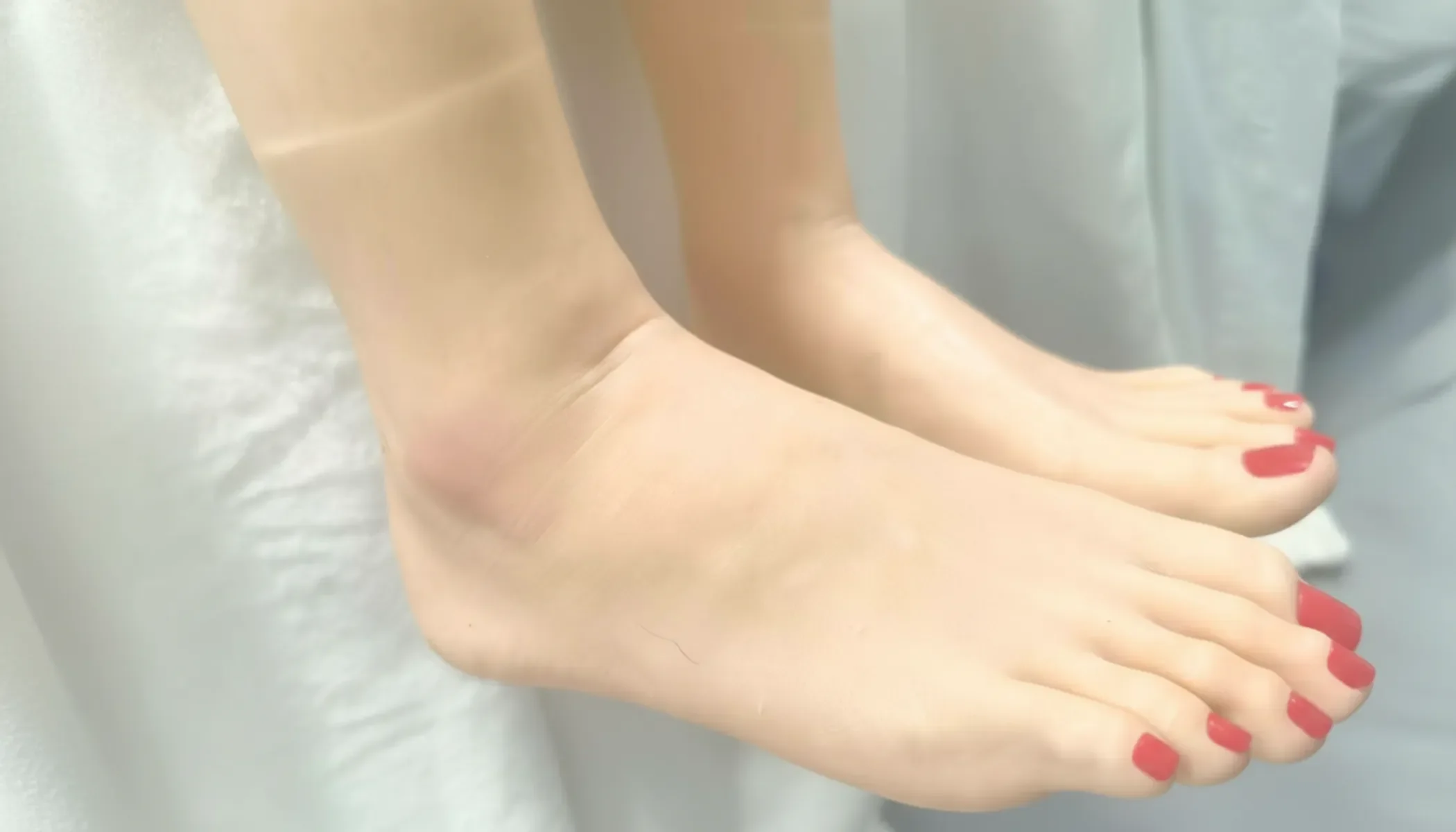
Physics demands a compromise. Because of the mold design and the transition between soft body material and high-density foot material, hardened feet often leave a visible mark. You may notice a thickened area around the ankle or a faint, circular seam wrapping around the lower calf. For perfectionists, this aesthetic flaw is a necessary trade-off for structural integrity.
| Feature | Standard Feet | Hardened Feet |
|---|---|---|
 |
||
| Material Density | Uniformly soft | High density from ankle to sole |
| Ankle Appearance | Seamless, natural | May have a visible thickening/ring |
| Standing Ability | Strictly prohibited | Short-term (with limitations) |
| Poke-through Risk | Extremely High if stood upon | Significantly Reduced |
💔 User Pain Points: Why Do We Need Them?
The Nightmare of 'Skeleton Poke-Through'
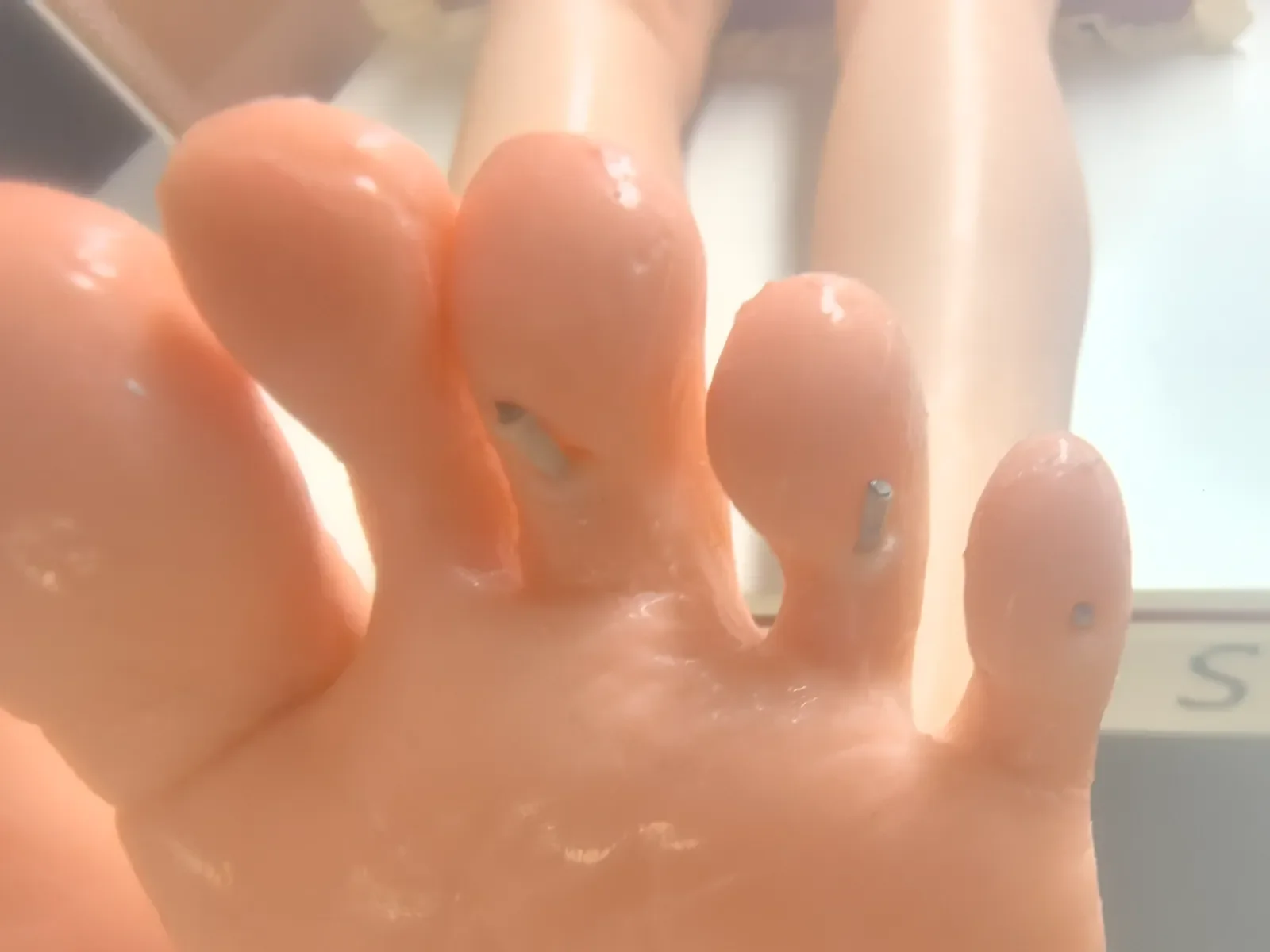
The biggest fear of any doll owner is 'poke-through' (穿模). This happens when the heavy metal toe bones slice through the soft TPE/silicone under the pressure of gravity, exposing the metal skeleton. Once the sole is pierced, it is incredibly difficult to repair seamlessly. Hardened feet act as a protective shield, drastically reducing this risk.
The Illusion of Independence
A common misconception is that hardened feet turn a doll into an independent statue. While it is true that some smaller, lighter dolls with hardened feet can stand unsupported for a brief moment (perfect for a quick photoshoot), this is the exception, not the rule.
⚖️ Usage Scenarios & Crucial Precautions
Even with hardened feet, gravity is your doll's worst enemy. If you plan to pose your doll vertically, you must adhere to strict guidelines.
⚠️ The Golden Rules of Standing
- Pressure Concentration: The surface area of the feet is small. The longer the doll stands, the higher the risk of micro-tears in the material.
- The 4-Hour Limit: Never leave your doll standing continuously for more than 4 hours.
- Mandatory Support: For any long-term standing needs, you must rely on external support. Use professional display stands, chairs, walls, or sofas to distribute the weight. Do not let the ankles bear the full load.
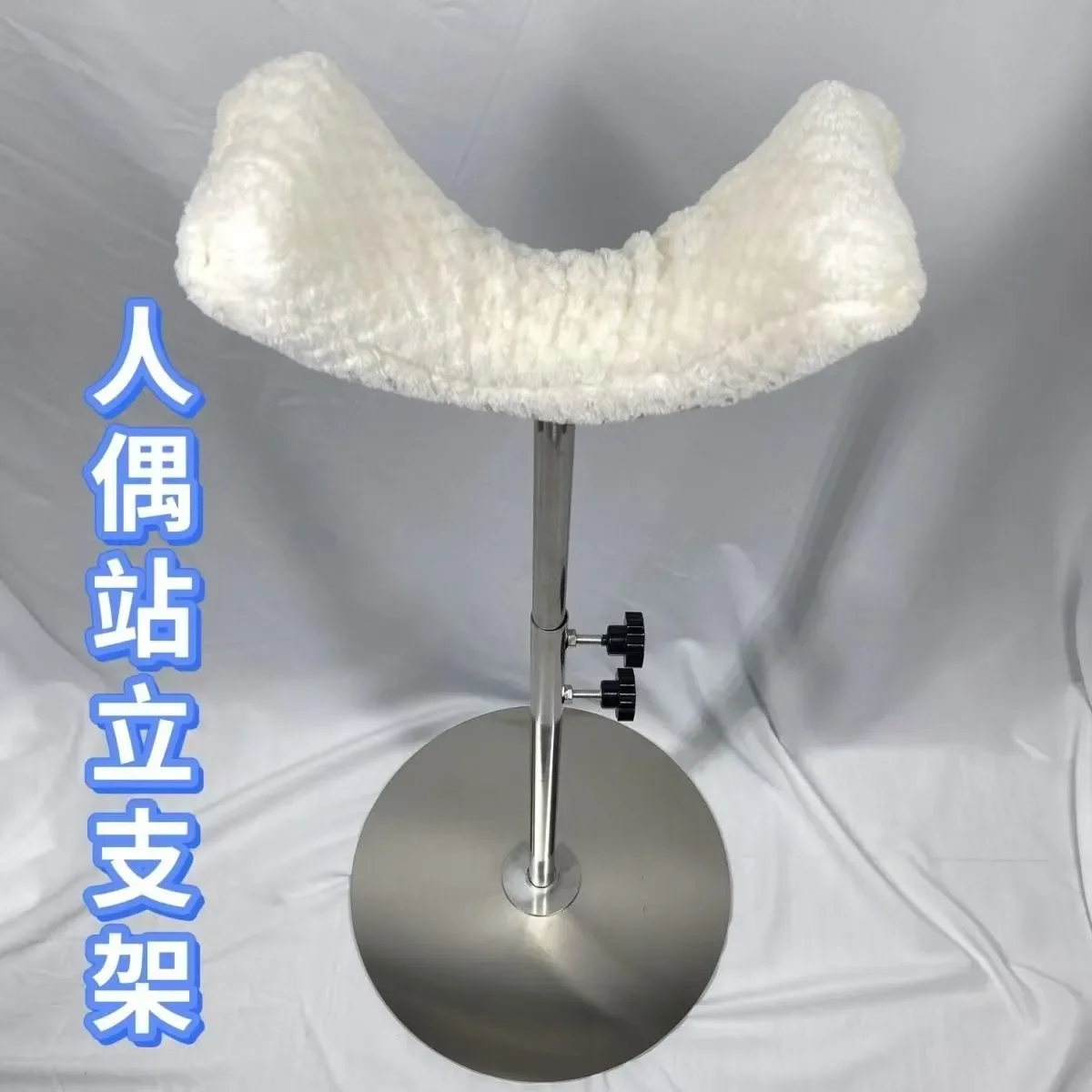
🧸 Comprehensive Maintenance & Care Guide
There is currently no magic potion to indefinitely extend the life of TPE or silicone. Longevity depends entirely on the owner's daily care and handling habits.
1. Posture & Storage: The 'Factory Reset'
TPE and silicone have 'memory.' If left in a stretched position, the material will eventually tear.
- Lay Flat: When not in use, the doll should be laid flat on her back.
- Restore Default Posture: Always return the limbs to their straight, neutral 'factory' position.
- Avoid Extreme Poses: Do not leave the doll in splits, with arms raised high, or in sitting positions for extended periods. Localized over-stretching causes irreversible deformation and cracking.
2. Environmental Control
- Temperature & Humidity: Keep the storage space cool, dry, and away from direct sunlight.
- Moisture Control: Use desiccants (silica gel packets) or bamboo charcoal bags in the storage area to prevent mold and material degradation.
- Hazards: Keep the doll strictly away from sharp objects, pets with claws, and open flames.
3. Safe Packing & Moving
If you need to store or transport the doll:
- Remove the head and place it inside a dedicated protective mask/box to protect the delicate makeup and eyelashes.
- Wrap the body securely in the provided soft blanket to prevent scratches and surface damage.
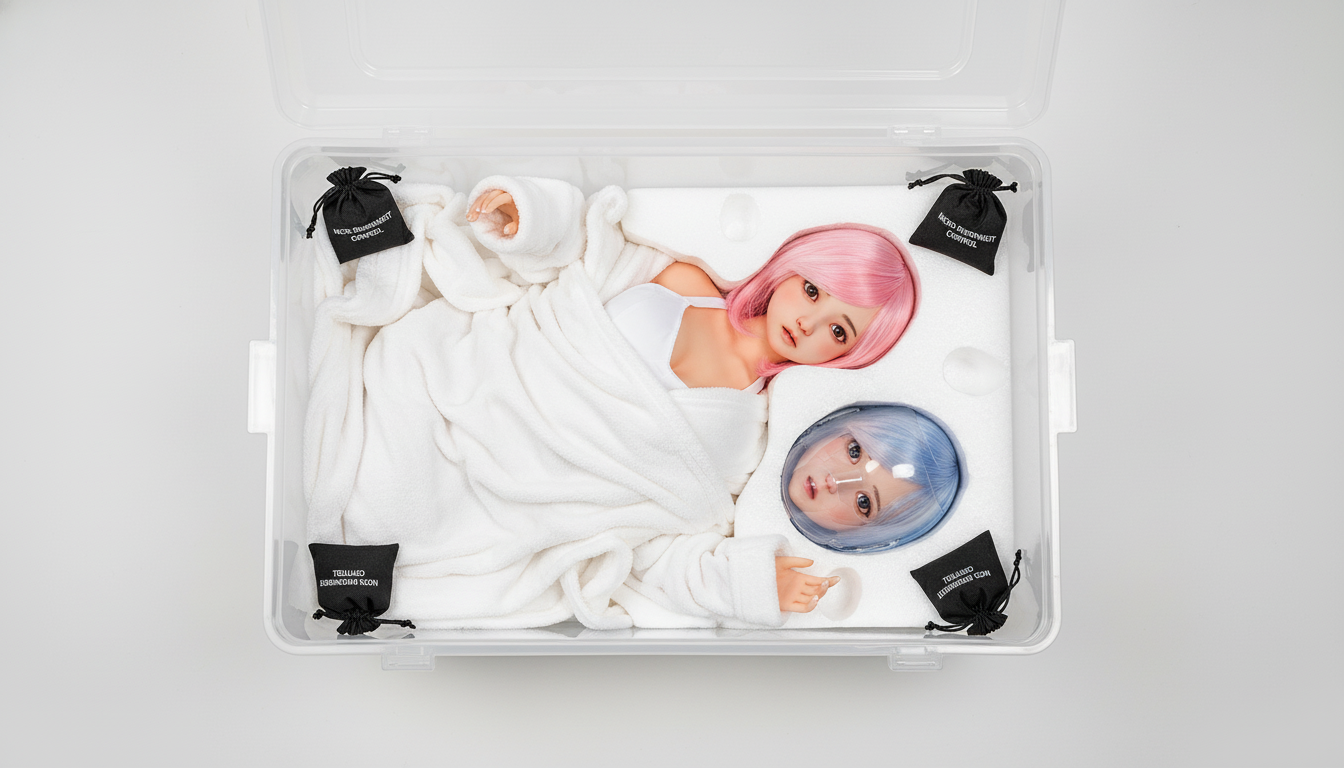
Final Takeaway: Hardened feet are a fantastic upgrade for structural safety, but they are not a magical anti-gravity device. Treat your doll with care, respect the limits of the materials, and she will remain beautiful for years to come.
References & Sources
- TPE vs Silicon: A Comprehensive Comparison for Durability and Flexibilityplastic-pellet.com - Technical examination of TPE and silicone materials, detailing load bearing and density limits.
- Liquid Silicone Rubber (LSR) vs. Thermoplastic Elastomers (TPE)simtec-silicone.com - Comprehensive guide comparing the physical limits and compression deformation of elastomeric materials.
- What is TPE? - Learn about Thermoplastic Elastomer Materialkuraray.com - Detailed analysis of thermoplastic elastomer density, compression set, and tensile properties.


![[Shedoll] ChuYue 163cm Bar Succubus - H-cup Anime Babe ,54cm Thunder Thighs|Black Garter Belt Realism|Kneeling Doll ,Heating Pussy](https://www.shedoll.com/cache//static/media/lovedoll/chuyue/163cm/1-500x750-contain.jpg)
![[Shedoll] ChuYue 163cm Bar Succubus - H-cup Anime Babe ,54cm Thunder Thighs|Black Garter Belt Realism|Kneeling Doll ,Heating Pussy](https://www.shedoll.com/cache/-static-media-lovedoll-chuyue-163cm-7-500x750-contain.JPG)
![[Shedoll] ChuYue 170cm Executive Goddess - 101cm Peach Hips×55cm Snake Waist|Run-Proof Sheers|Articulated Glasses Touch](https://www.shedoll.com/cache//static/media/lovedoll/chuyue/170-tpe-2.0/1-500x750-contain.jpg)
![[Shedoll] ChuYue 170cm Executive Goddess - 101cm Peach Hips×55cm Snake Waist|Run-Proof Sheers|Articulated Glasses Touch](https://www.shedoll.com/cache//static/media/lovedoll/chuyue/170-tpe-2.0/8-500x750-contain.jpg)
![[SHEDOLL] Neon Dominatrix CHU LIN - 163cm H-cup with Liquid Latex & Leather Whip (Movable Jaw/Heating Channel)](https://www.shedoll.com/cache//static/media/lovedoll/Chu Lin/163cm/1-500x750-contain.jpg)
![[SHEDOLL] Neon Dominatrix CHU LIN - 163cm H-cup with Liquid Latex & Leather Whip (Movable Jaw/Heating Channel)](https://www.shedoll.com/cache//static/media/lovedoll/Chu Lin/163cm/7-500x750-contain.JPG)
![[SHEDOLL] Charlene 160cm | C-cup Ravishing Maid Costume | Heated Body + Custom Hair & Oral Channel | Cosplay Office Secretary Fantasy](https://www.shedoll.com/cache//static/media/lovedoll/Chu Lin/160-white-off-shoulder-frilled-maid-dress/lovedoll-charlene-white-off-shoulder-frilled-maid-dress-0-500x750-contain.jpg)
![[SHEDOLL] Charlene 160cm | C-cup Ravishing Maid Costume | Heated Body + Custom Hair & Oral Channel | Cosplay Office Secretary Fantasy](https://www.shedoll.com/cache//static/media/lovedoll/Chu Lin/160-white-off-shoulder-frilled-maid-dress/lovedoll-charlene-white-off-shoulder-frilled-maid-dress-16-500x750-contain.jpg)