

 English



In the world of physical companions, "uniqueness" is the ultimate pursuit. While commercial silicone dolls are exquisite, they often come with a high price tag (usually over $2,000) and may not perfectly align with the specific vision in your heart. Thus, two distinct paths lie before enthusiasts: the DIY route, filled with challenges, sweat, and artistic creation; and the Factory Customization route, relying on top-tier craftsmanship, extreme detailing, and technological enhancement.
This article serves as a comprehensive white paper, analyzing these two paths in depth. Whether you are a hardcore maker wanting to sculpt your dream lover by hand, or a discerning collector seeking the ultimate experience and flawless detail, you will find your answers here.
Part 1: The Maker's Romance — Building Your Own Silicone Doll (DIY Guide)
This is not just a craft project; it is an adventure where art meets science. This guide aims to demystify this ambitious undertaking. It is an expert-level project requiring immense patience, a dedicated workspace, and a willingness to learn new skills in sculpting, mold-making, and handling specialized materials. While daunting, for a dedicated DIY enthusiast, the process of breathing life into "her" with your own hands is a reward no purchase can replace.
The process breaks down into four core stages: Sculpting, Mold Making, Silicone Casting, and Artistic Finishing.
1. The Reality of Cost and Time: Is DIY Really Cheaper?
Many start with the intention of saving money, but this is a misconception. While commercial dolls are expensive, building your own is also a significant investment. Do not view it as a budget alternative, but rather as creating a one-of-a-kind piece of art where the primary cost is your labor and learning curve.

Initial Material Cost Estimate (Conservative, excluding mistakes):
- Platinum Silicone: $200 - $400 — The core of the skin.
- Sulfur-Free Clay: $50 - $100 — For sculpting the prototype.
- Mold Making Supplies: $150 - $250 — Plaster, fiberglass, or mold silicone.
- Armature & Tools: $100+ — The internal structural support.
This brings your initial outlay to between $500 and $850. Beyond the financial cost, the time investment is immense. Expect to spend 100-200+ hours on sculpting, molding, and finishing. This commitment makes material selection critical.
2. Material Science: Why "Skin-Safe" Silicone is Non-Negotiable
Your choice of material is the most important decision you will make. While many commercial dolls use TPE (Thermoplastic Elastomer), it requires expensive industrial injection molding machinery and is unsuitable for home DIY. For high-end homemade dolls, the industry standard is Platinum-cure silicone.
- Safety: You must use products labeled "Skin-safe" or "Body-safe". This means the cured product is non-toxic and chemically inert.
- Why Platinum-Cure? This term relates to safety and quality. This type of silicone cures without producing harmful byproducts and has minimal shrinkage, faithfully capturing every pore of your sculpture. It is stable, durable, and won't break down or leach chemicals.
- Avoid Tin-Cure: Never use cheaper "Tin-cure" silicone. It can result in a toxic final product and is prone to "Cure Inhibition," potentially ruining your entire project.
About Touch (Shore Hardness): Softness is measured on the Shore Hardness scale. For a realistic fleshy feel, you need very soft platinum silicone, typically in the 00-20 to 00-30 range. This range gives the final product lifelike pliability and drape.
3. The 4-Phase Roadmap: From Clay to Companion
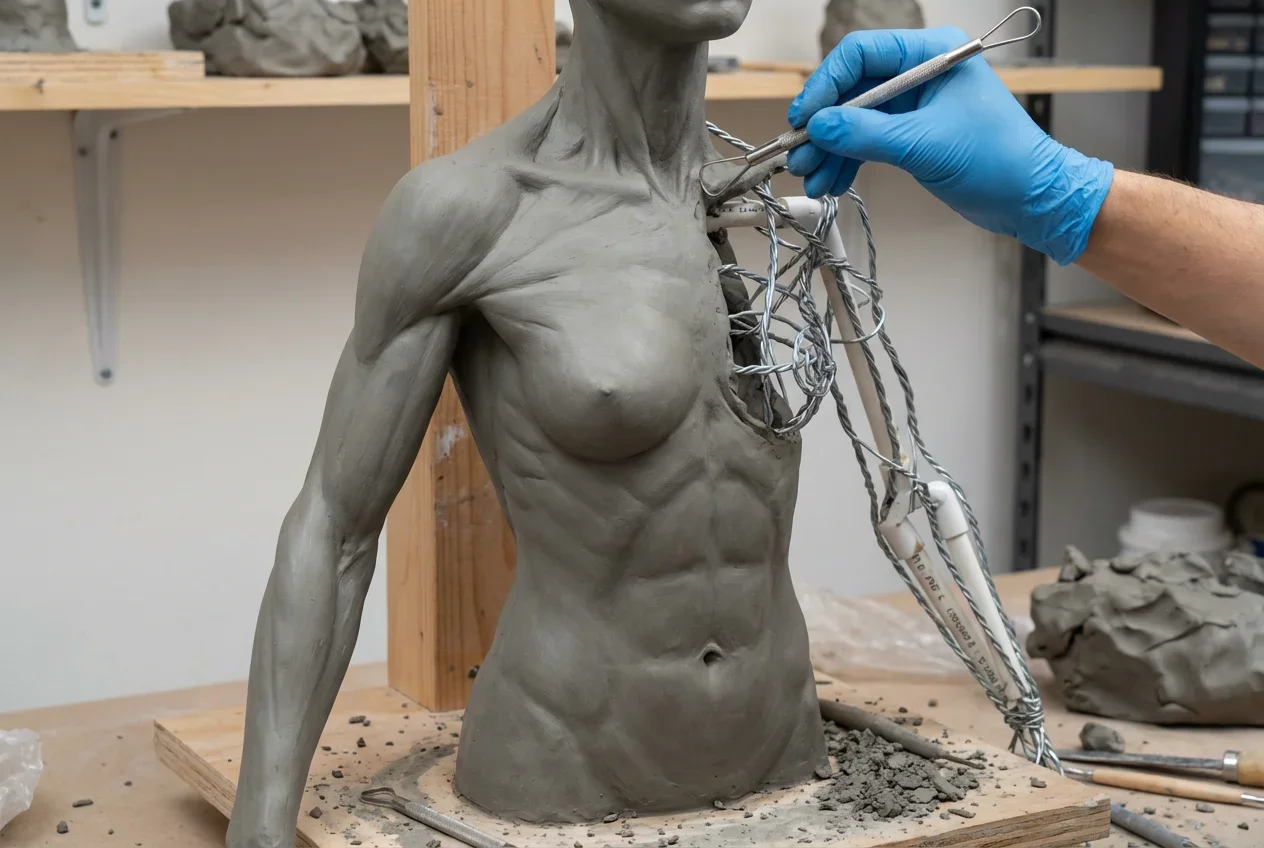
Phase 1: Sculpting — Shaping Without Ruining the Silicone
This is where your artistic vision takes shape, but a single material mistake here can doom the project. Many common modeling clays contain Sulfur. Sulfur is the "enemy" of platinum silicone, causing Cure Inhibition—a chemical reaction that prevents the silicone from hardening, leaving you with a sticky, unusable mess. To avoid this, you must only use Sulfur-free, oil-based clay.
The Armature: Inside your sculpture, you need an internal skeleton to provide structure and allow the doll to be posed. Simple armatures often involve PVC pipes and joints. This is essential for creating a posable figure rather than a static statue.
Pro Tip: Sculpt details slightly "sharper" than you want them. The mold-making process softens lines, especially when sculpting a realistic head. Exaggerating features ensures they don't get lost during casting.
Phases 2 & 3: The Art of Molding and Casting
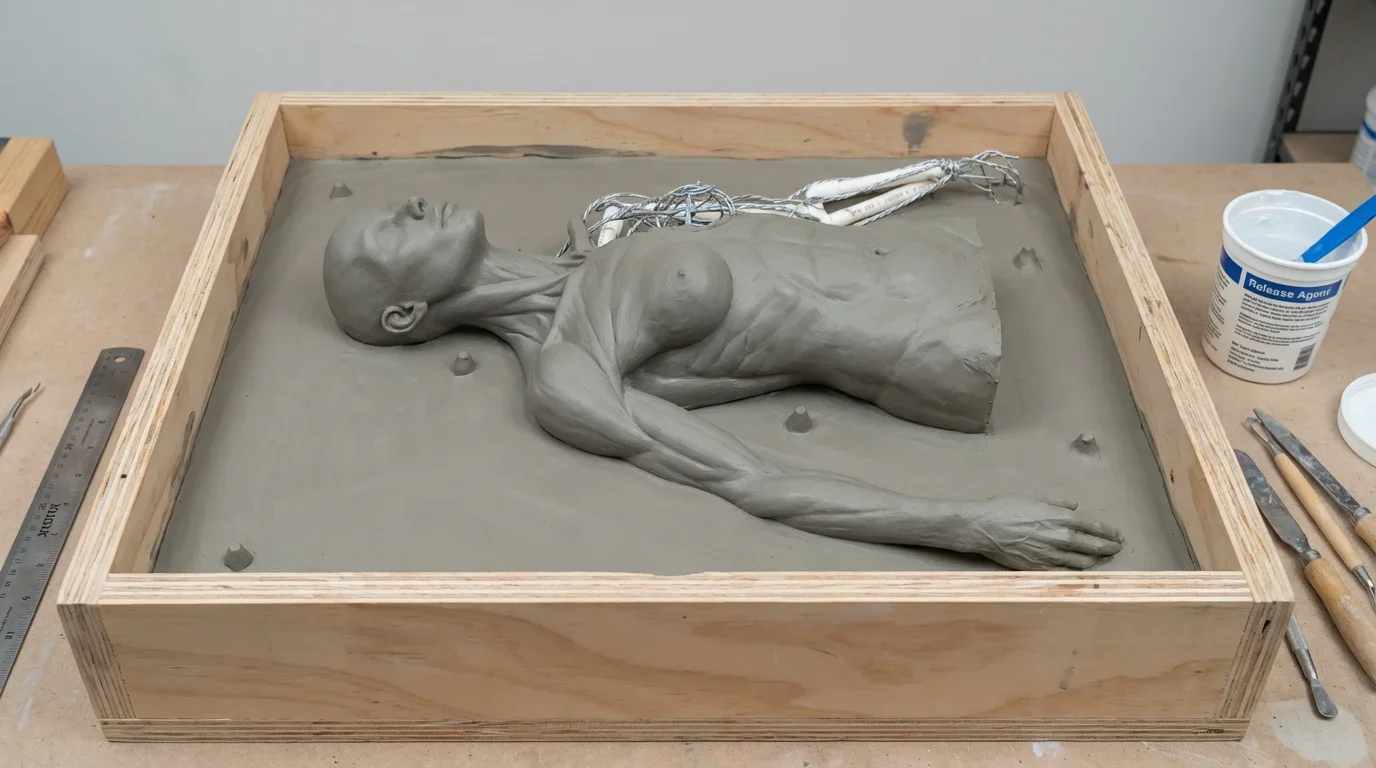
Once the sculpture is complete, you need to create a Two-part mold. This usually involves building a box around the sculpture and pouring the first layer of mold material to capture one side.
Critical Step: Mold Release
Before pouring the second half of the mold, applying mold release is the most critical step. Forgetting this will cause the two mold halves to fuse into a single, inseparable block, permanently trapping your sculpture and destroying the mold. This simple spray is the only barrier against catastrophic failure.
Before pouring the second half of the mold, applying mold release is the most critical step. Forgetting this will cause the two mold halves to fuse into a single, inseparable block, permanently trapping your sculpture and destroying the mold. This simple spray is the only barrier against catastrophic failure.
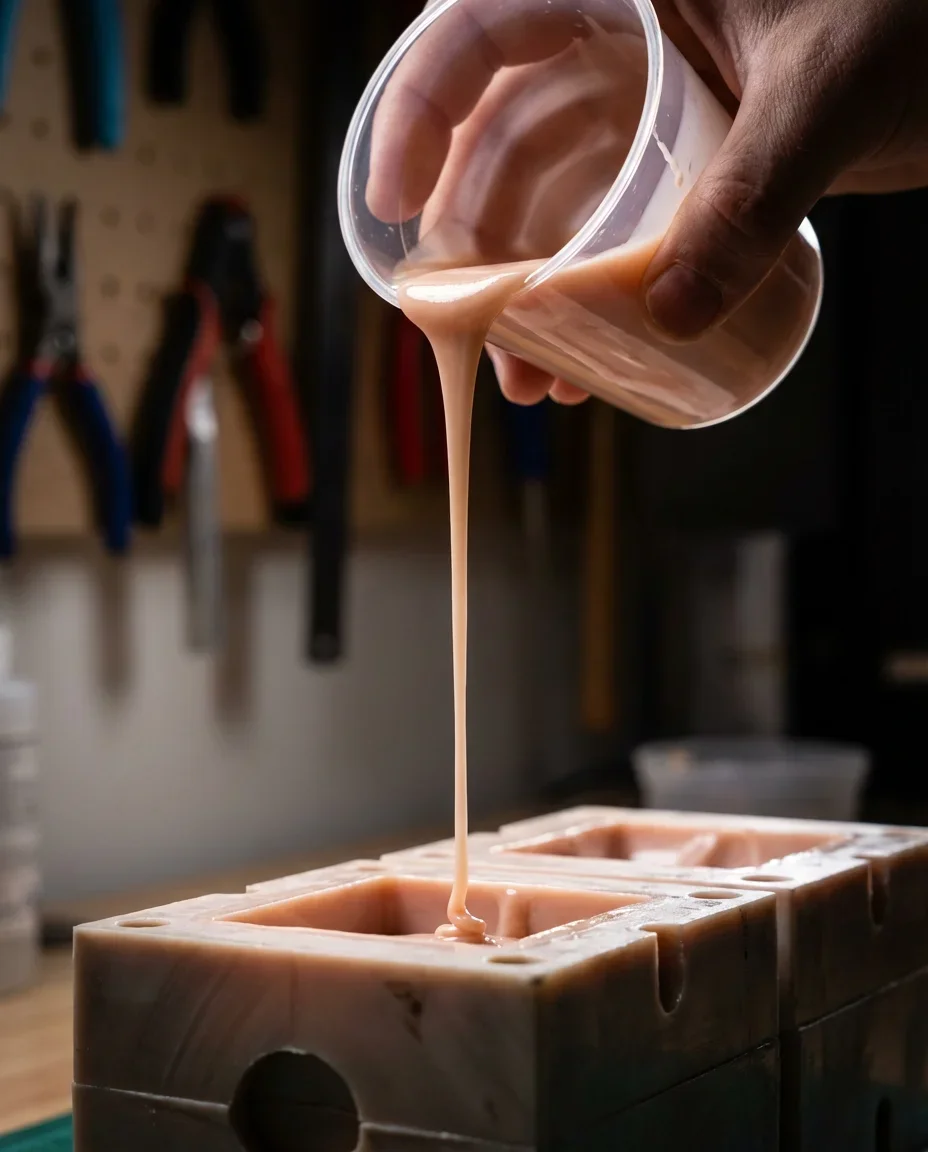
Pouring Technique: After assembling the mold, pour the liquid silicone into the cavity. To avoid air bubbles (the DIYer's worst enemy), use the "High and Thin" pouring method: pour the silicone in a steady, thin stream from at least a foot above the mold. This helps stretch and pop bubbles on the way down, resulting in a cleaner cast.
Phase 4: Finishing Touches
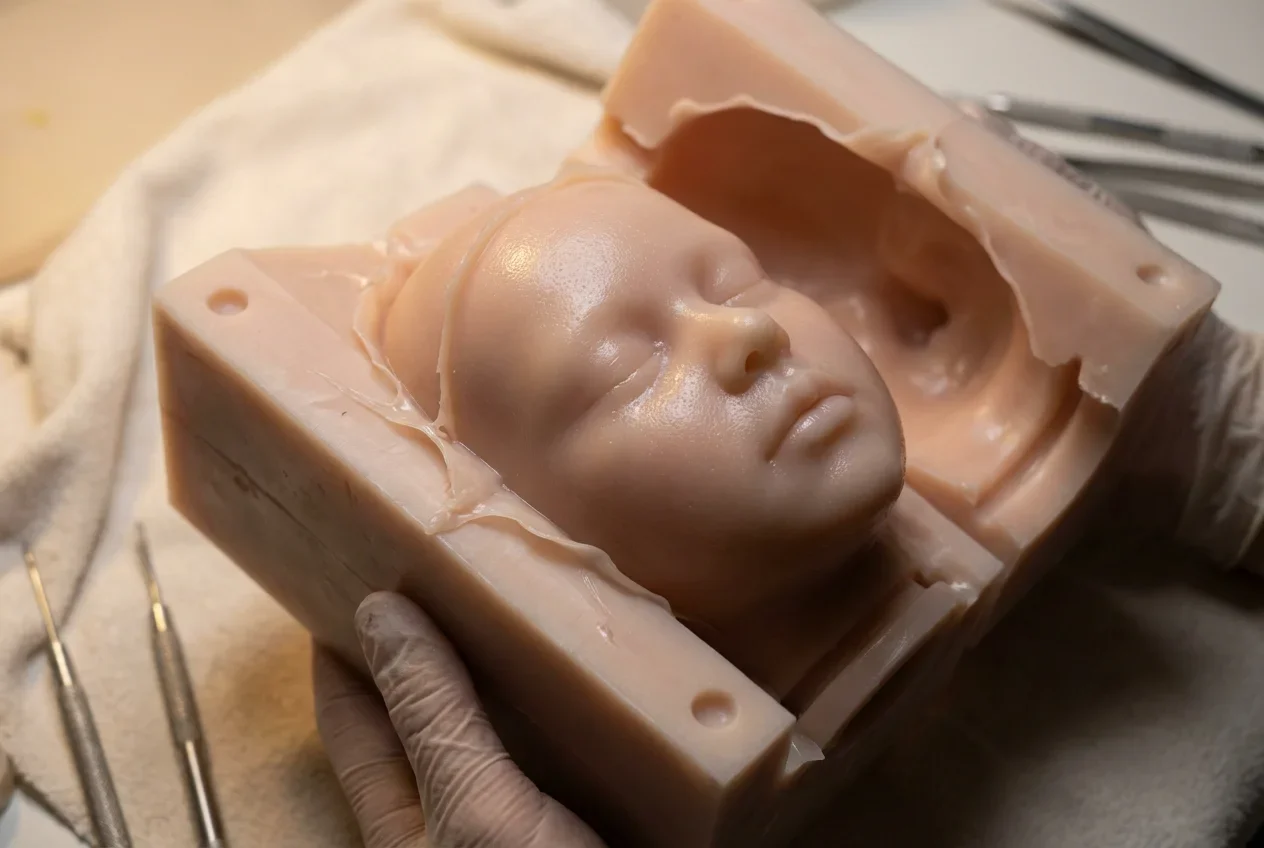
After demolding, you need to trim seams and apply silicone paint for makeup. This is the moment you give the doll her "soul."
Part 2: Industrial Perfection — The SHEDOLL Factory Customization Process
If DIY is the ultimate projection of personal emotion, factory customization is the culmination of industrial precision and aesthetic design. SHEDOLL's customization service is not simple "assembly," but a deep re-creation based on top-tier body molds, master-level head sculpts, and rich optional features. Compared to personal DIY, factory customization offers superior advantages in production time, finish quality, durability, and functional diversity.
Next, we will break down how to complete a "soulful" doll customization at SHEDOLL in seven steps:
Step 1: Bestowing the Soul — Choosing Your Partner (Head & Makeup)
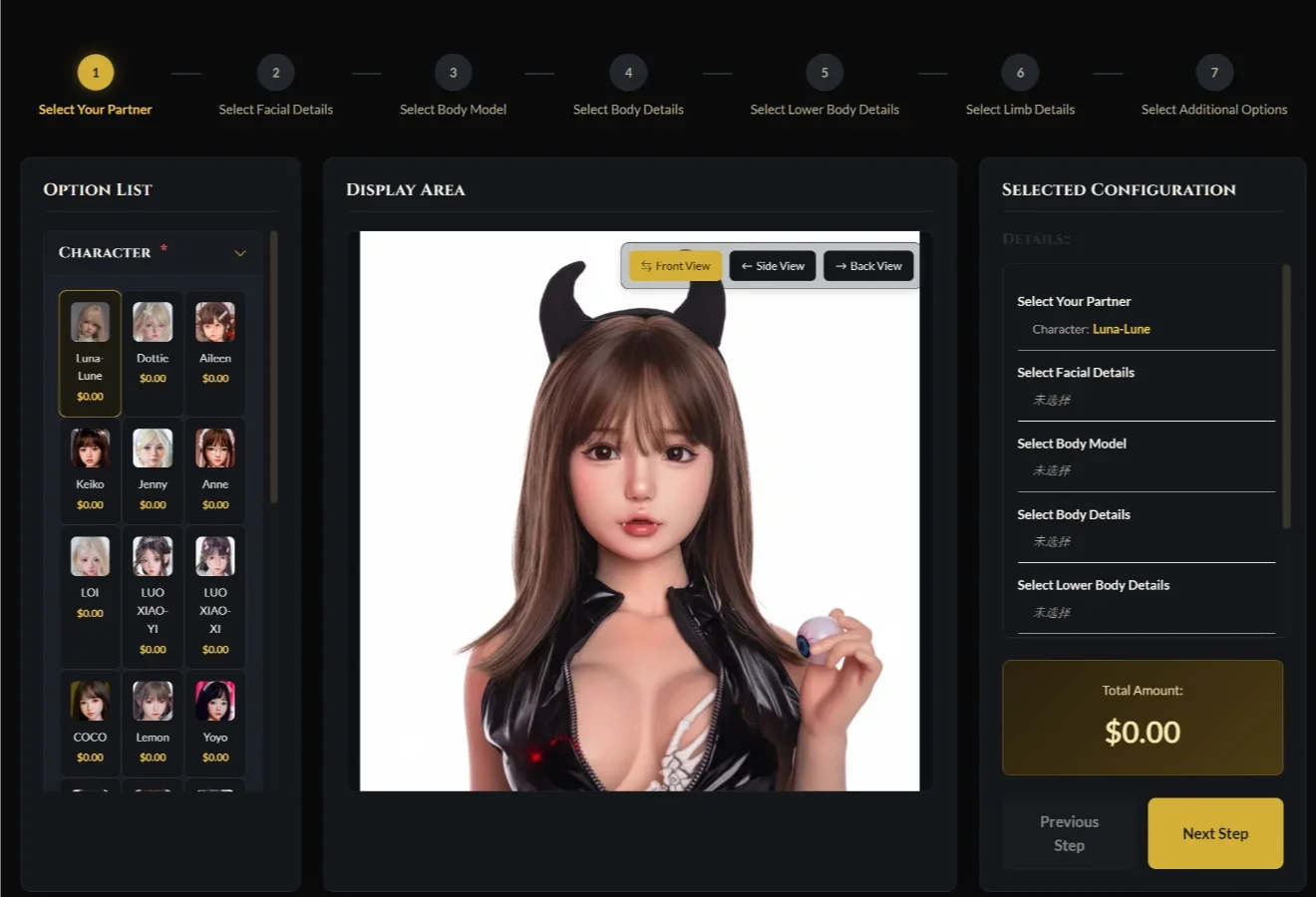
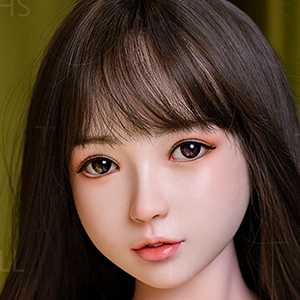
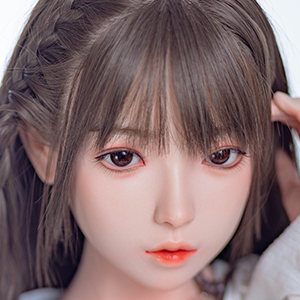
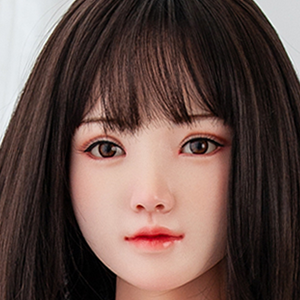
The head is where the soul resides. SHEDOLL offers different versions of head sculpting technology to suit various player needs.
1.1 & 1.2 Head Sculpt Versions
| Version | Material & Craft | Features | Target Audience/Scenario |
|---|---|---|---|
| Version 1.0 (Classic) | Platinum Silicone, exclusive inner shell. Choice of Soft or Hard head. | No oral movement. Due to the fixed structure, makeup stability is excellent and details are refined. | Photographers, Aesthetes. For those pursuing ultimate static beauty and long-lasting perfect makeup. |
| Version 2.0 (Interactive) | Platinum Silicone, exclusive inner shell. Soft head only. | Movable Mouth. Internal gears allow the mouth to open and close. | Interactive Players. Enriches usage scenarios and adds the fun of realistic interaction. |
| Version 3.0 (Flagship) | Platinum Silicone, upgraded craft. Soft head only. | Movable Mouth + Blinking Eyes. Adds eye orbit gears, supporting opening and closing eyes. | Deep Immersion Players. Achieves "embracing the user" through eye contact. Extremely realistic. |
For more details, please click here.
1.3 Custom Makeup (Cosplay & Replication)
Not satisfied with the default face? SHEDOLL supports deep customization. Players can upload three-view diagrams or multiple front photos of their desired character. Professional makeup artists will analyze and replicate the charm of 2D characters or real people onto the silicone head sculpt. This is the best way to realize Cosplay fantasies.
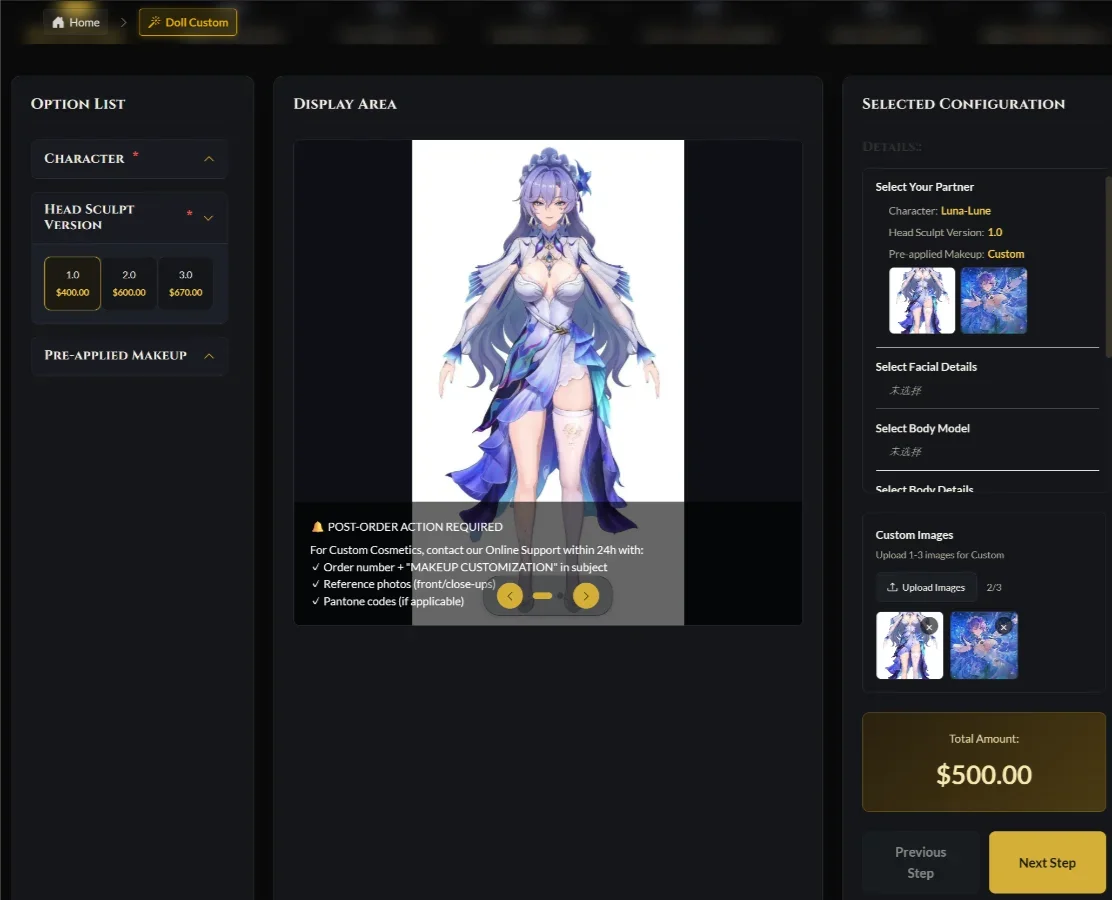
Step 2: Refining Facial Details
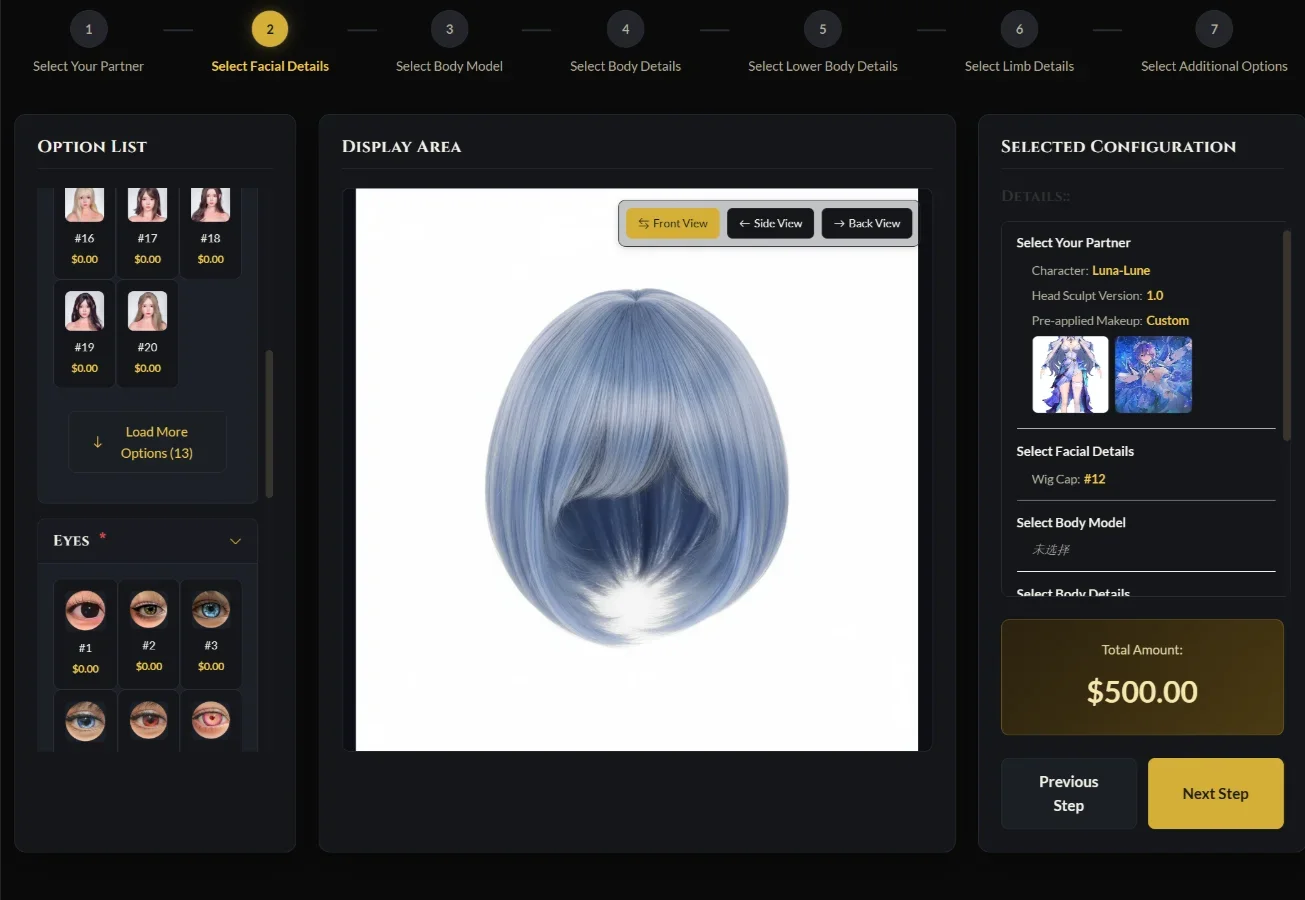
- Wigs: From Hime cuts to wavy curls, silver to burgundy, factory defaults cover all mainstream aesthetics.
- Implanted Hair: (Extra Cost) A high-end option. Unlike wigs, hair is implanted strand by strand into the scalp using high-temperature fiber or real hair. This creates an extremely natural hairline, allowing users to comb and braid just like real hair.
- Eyes: The windows to the soul. Offering up to 33 eye choices (including 28 custom irises), from realistic to fantasy styles.
Step 3: Body Model & Material Science
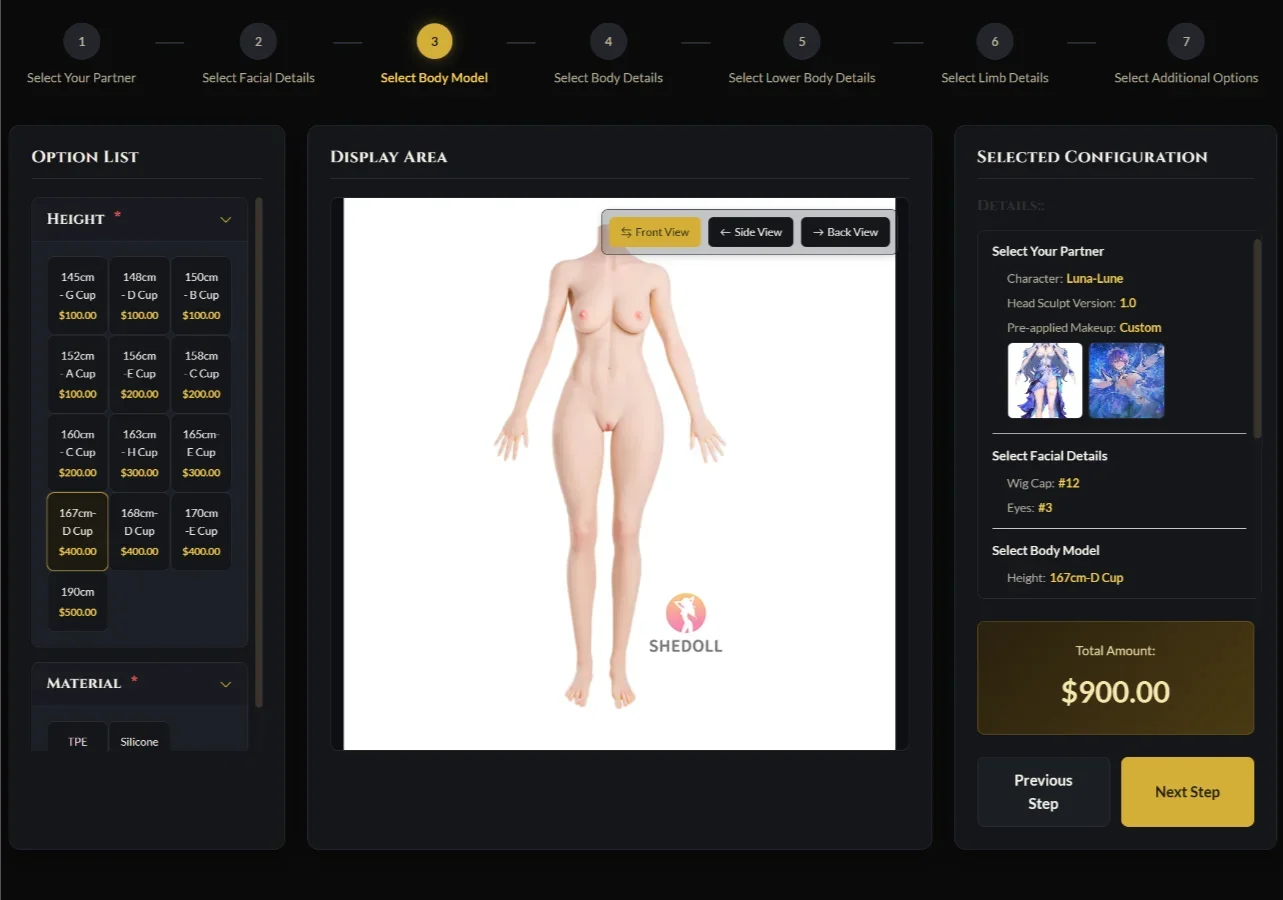
3.1 Height & Body Data
Currently offering 13 female bodies (140cm-170cm) and 1 male body (190cm), with a 175cm tall model in development. Choosing height is not just about aesthetics, but also a consideration of weight and handling.
Data Interpretation:
- Petite (140cm-148cm): Lighter weight, easy to handle and pose. Suitable for those who prefer the "Loli" style or have limited physical strength.
- Standard (156cm-163cm): Closest to the average Asian female height. Best clothing compatibility, balancing feel and visuals.
- Tall (165cm-170cm): Strong visual impact with long legs, but heavier. Suitable as a centerpiece art object or photography model.
3.2 The Core Material Debate: TPE vs. Silicone
This is the dilemma for all buyers. SHEDOLL provides a professional comparison:
- Silicone:
- Pros: Odorless, very slow oil secretion, long lifespan, dense and textured. Only silicone can achieve realistic skin texture replication.
- Traits: Chemically stable, resistant to staining. Can support "Standing Feet" without visible seams.
- TPE (Thermoplastic Elastomer):
- Pros: Soft and squishy feel ("Mochi-like"), high elasticity, tear-resistant, relatively affordable.
- Cons: Prone to oiling (needs frequent powdering), stains easily, slight chemical smell. Body makeup does not last as long as on silicone.
Step 4: Touch & Body Details
4.1 Softness Grading
SHEDOLL classifies body touch into three levels:
- Default Factory Softness: Firm, defined muscle lines, suitable for those who like fit bodies.
- Default Softness (Soft Breast/Groin): The balanced choice. Key areas are soft, while the torso provides support. Compatible with seamless standing feet.
- Full Body Softening: Extreme softness, delicate as water. Note: If standing feet/hands are selected, slight marks may appear at the joints.
4.2 Realistic Skin Texture — Silicone's Exclusive Magic
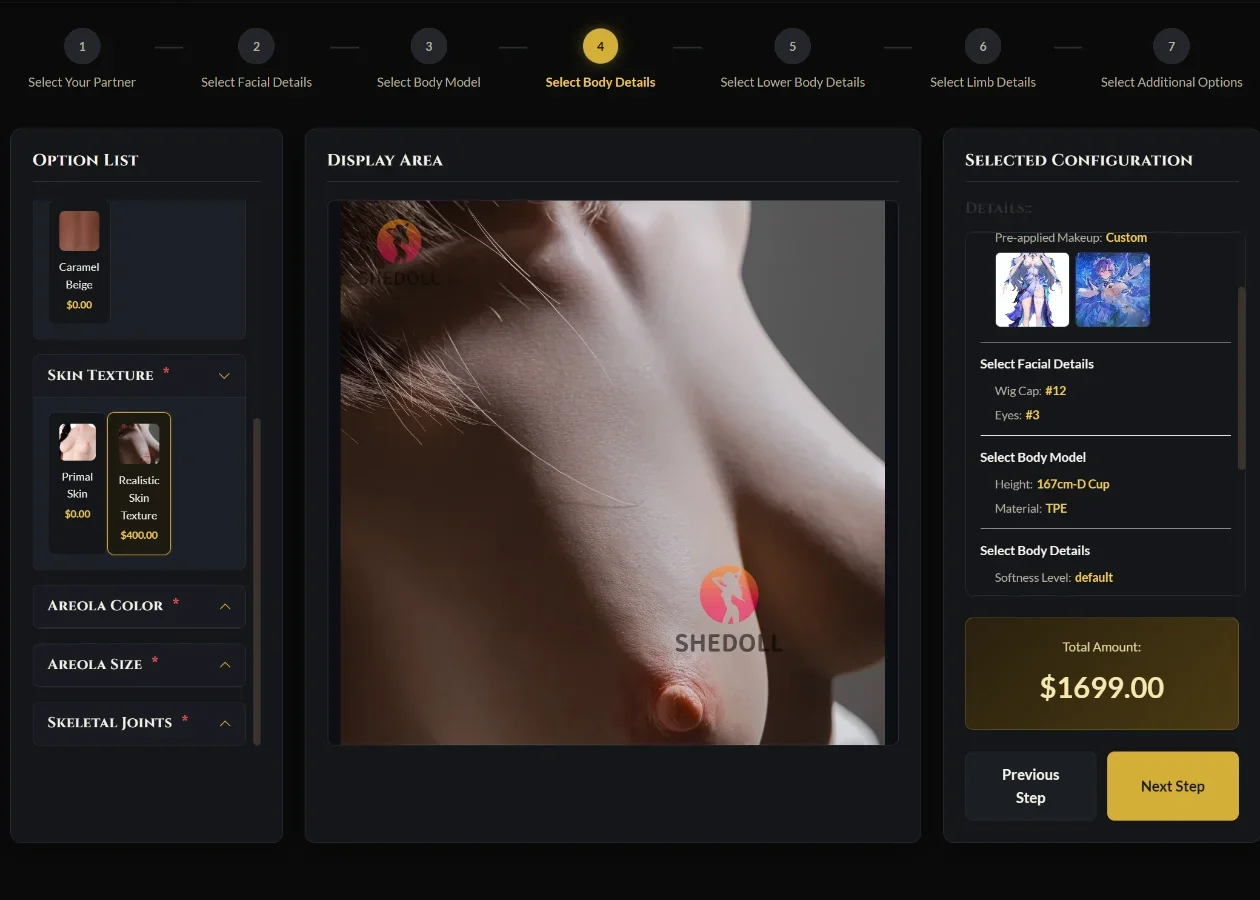
This is the watershed between "toy" and "simulation."
What is Skin Texture? It's not painted on; it's replicated by the mold. The mold captures real human pores, lines, and even vein relief. Upon curing, these tiny details are perfectly preserved in the silicone.
Why add it? Visually eliminates the "plastic/rubbery" look; tactilely provides a realistic friction and texture.
Durability: Integrated into the material, it won't peel off. However, it may naturally fade slightly over time with friction, which is a "human-like" aging process in itself.
4.3 Skeleton System: Evolution of EVO
All skeletons use the EVO structure, but tuning determines the playstyle:
- Loose Skeleton — "The Drunken Beauty":
Joints are loosened to mimic a relaxed human state. Pros: Extremely soft, feels like a limp lover in your arms, high realism. Cons: Hard to hold poses, difficult to control center of gravity, not recommended for novice photographers.
- Tight Skeleton — "Photographer's Choice":
High joint damping, keeps difficult poses stable. Suitable for photography, painting, or display requiring fixed postures.
Steps 5 & 6: Intimate & Limb Details
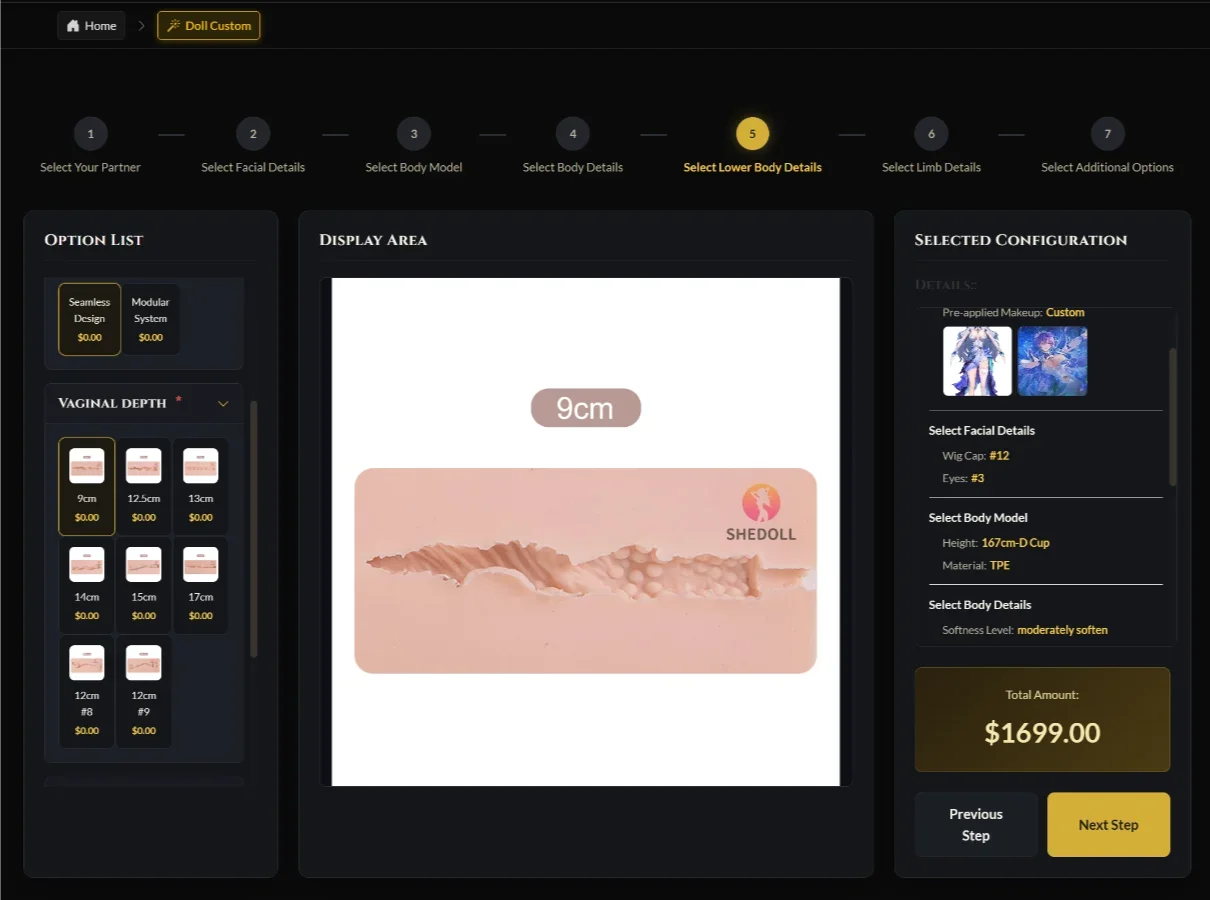
5.3 Tunnel Type: Integrated vs. Separated
- Integrated: Cleaning is slightly more troublesome (requires an irrigator), but the internal structure is continuous, offering the most realistic experience with no foreign body sensation.
- Separated (Insert): The tunnel can be removed for cleaning. Hygienic and convenient, but installation is fiddly, and there are visible seam lines.
6.2 Finger Bone Types: Details Matter
Beyond the default soft brass, high-end players recommend Articulated Finger/Toe Bones. Made of stainless steel, every joint can bend. To prevent metal puncture, SHEDOLL uses flocking treatment and cotton thread wrapping. Essential for hand close-up photography.
6.3 Standing Feet (Hardened)
To allow the doll to stand, the ankles and soles must be hardened.
Tech Reveal: Silicone "Seamless Standing Feet" show almost no marks initially. However, due to different evaporation rates of soft and hard silicone, slight marks may appear after 3-6 months. This is physical inevitability, but compared to other factories' "Boot Style" (obvious seams), this is the current industry peak.
Step 7: High-Tech & Extras
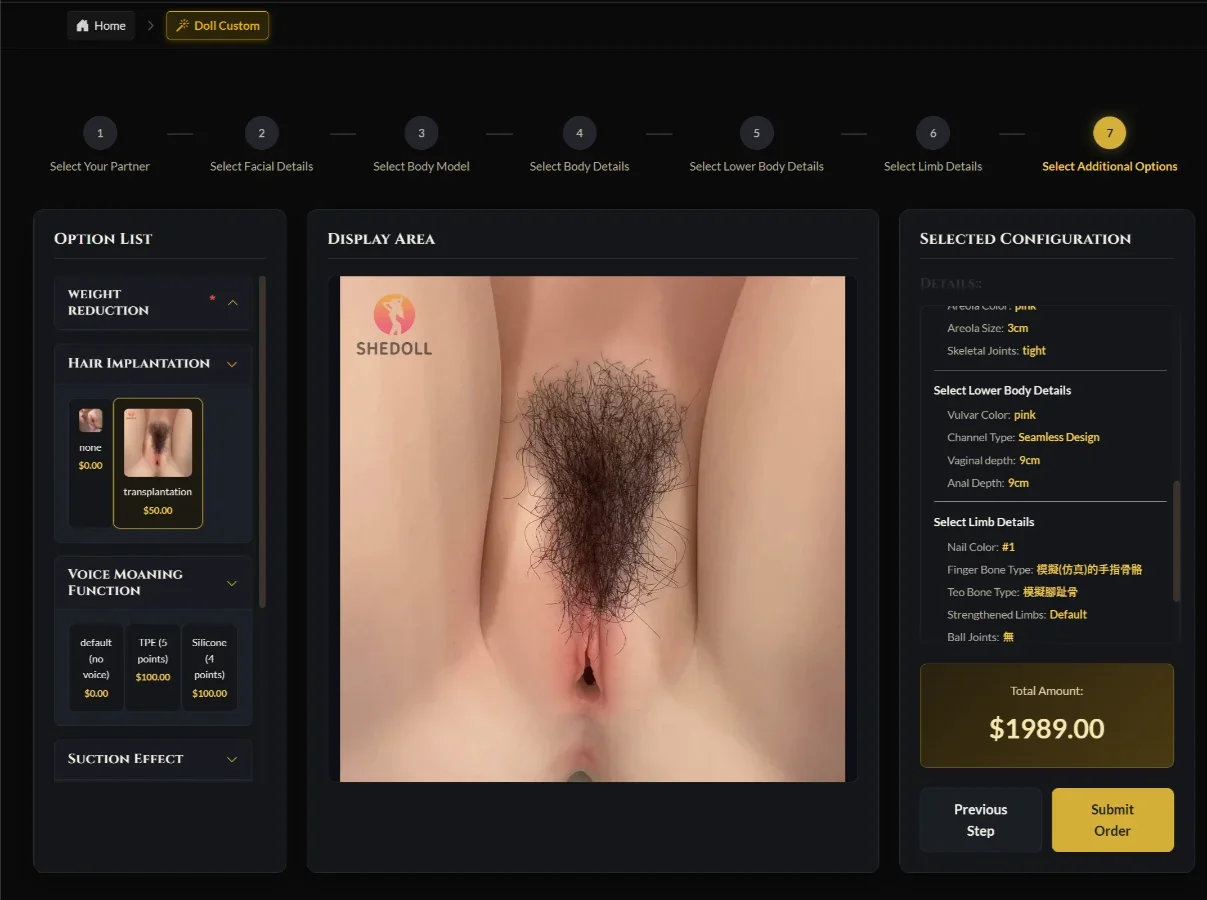
Key features evolving the doll from a "static model" to an "interactive partner":
- Voice & LLM Modules: Traditional sound just plays files. Combining LLM (Large Language Model) technology with suction systems allows the doll to react according to context—the future of interaction.
- Automatic Suction: Uses micro-vacuum pumps to simulate muscle contraction, providing active physical feedback.
- Body Heating System: Refusing a cold embrace.
- Wire Heating: Similar to an electric blanket, inside the torso. Safety: Must lie flat when heating, do not leave unattended.
- Water Circulation: (Region restricted) More even heat, but complex maintenance.
Conclusion: Choosing Your Path
Choose DIY, and you choose a thorny but rewarding path of a creator. You gain not just a doll, but skills in sculpture, molding, and chemistry, and the shock of seeing clay turn into a human form.
Choose SHEDOLL Factory Customization, and you choose to stand on the shoulders of giants to enjoy the ultimate experience. You leverage industrial precision, master aesthetics, and cutting-edge tech to obtain a near-perfect dream lover efficiently.
Whichever path you take, the destination is that soulmate who understands you, accompanies you, and belongs only to you.